
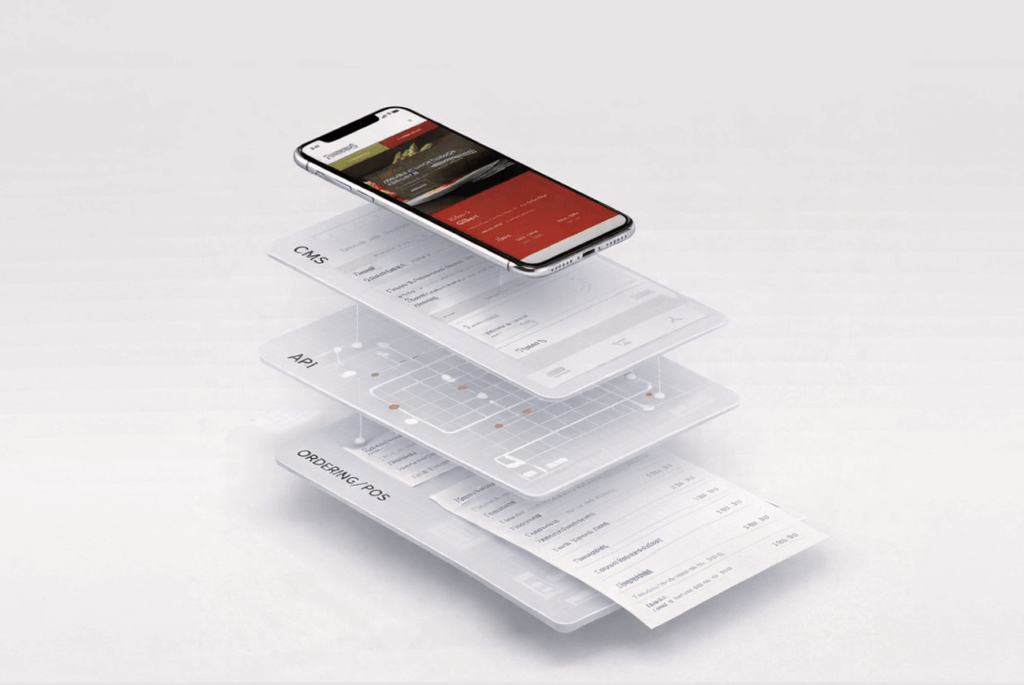
Restaurant websites are often treated as marketing tools. In reality, they sit at the center of daily operations—connecting menus, locations, ordering platforms, and internal systems. When those pieces don’t stay aligned, the website is usually where the problems show up first.
What It’s Supposed to Be
Restaurant websites are supposed to be simple.
A place to view a menu, find a location, maybe place an order.
But they carry far more responsibility.
Menus change constantly. Locations operate independently. Ordering platforms, loyalty programs, and third-party tools all need to connect and stay in sync. What looks like a straightforward website is sitting on top of a much larger system.
And when that system isn’t aligned, the website is where it breaks down.
Where Things Start to Drift
At first, it’s small—an outdated menu, inconsistent pricing, a promotion that shows up in one place but not another. Over time, those inconsistencies add up. Guests notice. Staff compensates. And the gap between what’s supposed to happen and what actually happens keeps growing.
Menus are often the first place this shows up. Most restaurants maintain them in more than one place—on the website, in the ordering platform, in printed form—each updated on its own schedule by whoever happens to own that piece. When a price changes or an item gets pulled, the odds that every version gets updated at the same time are low. What looks like a minor inconsistency internally looks like a mistake to the guest.
Ordering has the same problem. The experience a guest has placing an order is often shaped more by the ordering platform than the website itself—which means the website may look right while the actual transaction tells a different story. Where that system lives, how it connects, and who is responsible for keeping it current usually isn’t clear until something goes wrong.
When Locations Multiply, So Do Problems
Multi-location operations make this harder to manage and easier to ignore. Each location may have its own hours, its own menu variations, its own local promotions. That’s reasonable. But without a clear structure, those differences don’t stay contained—they accumulate. What starts as a local variation becomes content no one fully owns.
And none of this stays static after launch.
Websites change. Staff changes. Platforms update. New tools get added. Without clear ownership of the system—not just the website, not just the ordering platform, but how they work together—even a well-built setup will start to drift. → Read more: Designing Websites that Survive Change
That’s the part most organizations underestimate.
Because the website isn’t just where guests go to learn about your business. It’s where all of these moving pieces either come together—or don’t.
If your restaurant website is showing signs of drift—or you’re not sure who owns the system behind it—we should talk.
